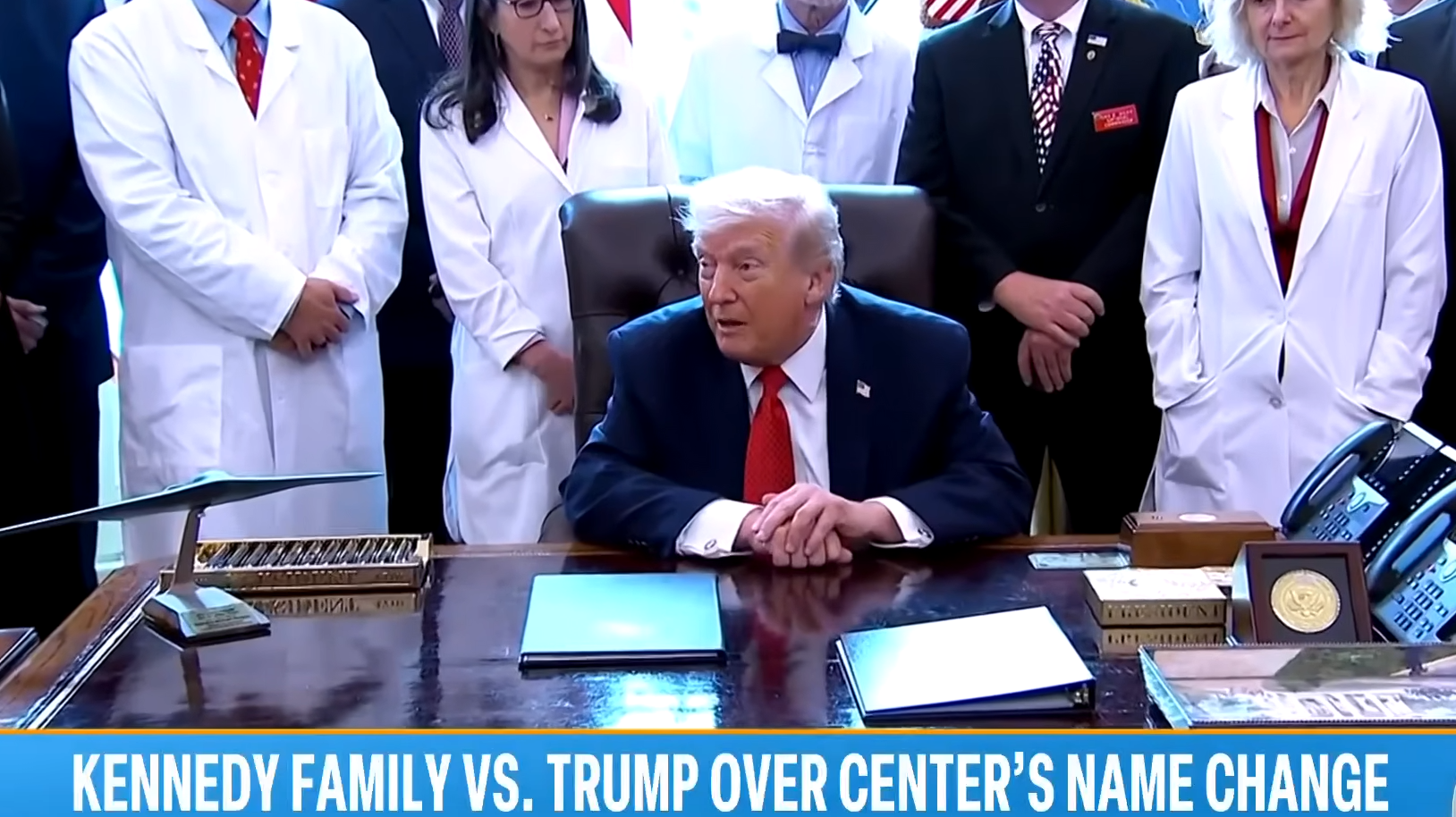
JFK’s Family Reacts to ‘Trump-Kennedy Center’ Renaming Plan
The Controversial Renaming of the Kennedy Center: A Clash of Legacies and Political Agendas
The Surprising Move to Rebrand a Storied Cultural Institution
In a move that has sent shockwaves through the political and cultural spheres, President Donald Trump’s hand-picked board at the Kennedy Center for the Performing Arts has voted to rename the iconic institution the “Trump-Kennedy Center.” This unexpected decision has raised serious legal questions and sparked intense backlash from members of the Kennedy family, who have long been associated with the center’s legacy.
The announcement came as a surprise to many, as the Kennedy Center has long been revered as a living memorial to the 35th President of the United States, John F. Kennedy. The center, which opened in 1971, was established by an act of Congress to honor the life and legacy of the beloved president, who was tragically assassinated in 1963.
According to the report from NBC News, President Trump’s board members, who were appointed in February, quickly installed the president as the new chairman and pushed through the controversial name change. A center spokesperson claimed the move “recognizes the current chairman [Trump] saved the institution from financial ruin and physical destruction,” referring to the more than $250 million in federal funding allocated last summer for repairs and maintenance at the center.
Backlash from the Kennedy Family and Congress
The decision to rename the Kennedy Center has been met with fierce opposition, particularly from members of the Kennedy family. Jack Schlossberg, the grandson of President Kennedy, condemned the move, stating that “Trump may have notched another win tonight. It just wasn’t one for the country. It was for himself.”
Kennedy’s niece, Maria Shriver, also weighed in, calling the renaming “downright weird” and suggesting that “perhaps President Trump will want to rename the Lincoln Memorial the Trump Lincoln Memorial.”
In addition to the Kennedy family’s condemnation, several members of Congress who serve on the Kennedy Center’s board have also spoken out against the decision. Democratic Representative Joyce Beatty, who was reportedly “muted” and not allowed to vote on the matter, stated that she “would not have supported this.” Beatty and five other Democratic lawmakers on the board have called the move illegal, arguing that “federal law established the center as a memorial to President Kennedy and prohibits changing its name without congressional action. Only Congress can rename the Kennedy Center. The wannabe king and his sycophantic minions can’t do it.”
The Potential Legal Challenges
The legality of the Kennedy Center’s name change is a central issue in this ongoing controversy. As the Democratic lawmakers have pointed out, federal law clearly states that the center was established as a memorial to President Kennedy, and any changes to its name would require congressional approval.
The Kennedy family and members of Congress are condemning the move as “illegal,” arguing that “only Congress can rename the Kennedy Center.” This raises serious questions about the validity of the board’s decision and the potential for legal challenges to the renaming.
Legal experts have weighed in on the matter, suggesting that the Trump-appointed board may have overstepped its authority in unilaterally deciding to change the center’s name. “The Kennedy Center was established by an act of Congress, and it’s clear that any changes to its name or purpose would require congressional approval,” said legal scholar Dr. Emily Garrison. “The board’s actions appear to be in direct violation of the law, and I would expect to see legal challenges emerge in the near future.”
The Potential Impact on the Kennedy Center’s Operations
The renaming of the Kennedy Center has also raised concerns about the potential impact on the institution’s operations and public perception. According to the NBC News report, ticket sales for the center’s three largest venues have already plummeted to levels not seen since the COVID-19 pandemic, with 43% of tickets remaining unsold since September.
This dramatic drop in ticket sales suggests that the public may be rejecting the center’s new association with President Trump, who remains a highly polarizing figure. The Kennedy family’s condemnation of the move, as well as the backlash from members of Congress, could further erode public trust and support for the institution.
Moreover, the Kennedy Center’s reputation as a prestigious cultural institution and a living memorial to President Kennedy could be irreparably damaged by the renaming. The center’s mission to “present the greatest performers and performances from around the world” may be overshadowed by the political controversy, potentially deterring artists, performers, and audiences from engaging with the center’s programming.
The Broader Implications: A Clash of Legacies and Political Agendas
The renaming of the Kennedy Center is not just a local issue, but rather a reflection of the broader political and cultural tensions that have been simmering in the United States. The clash between the Kennedy family’s legacy and President Trump’s political agenda represents a larger struggle over the interpretation and preservation of American history and values.
The Kennedy family has long been associated with “justice, peace, equality, dignity, diversity, and compassion for those who suffer” – values that many believe are in direct opposition to the policies and rhetoric of the Trump administration. The decision to rename the center in Trump’s honor can be seen as an attempt to rewrite this historical narrative and assert a different set of priorities.
This conflict over the Kennedy Center’s identity and purpose is emblematic of the larger battle over the soul of the nation. As the country grapples with issues of racial justice, economic inequality, and the role of government, the renaming of the Kennedy Center has become a symbolic battleground where these competing visions of America are being fought out.
Conclusion: The Enduring Legacy of the Kennedys and the Uncertain Future of the Center
The controversy surrounding the renaming of the Kennedy Center for the Performing Arts is a complex and multifaceted issue that touches on questions of legality, cultural heritage, and the ongoing struggle for the heart and soul of the nation. While the Trump-appointed board may have succeeded in pushing through the name change, the backlash from the Kennedy family, members of Congress, and the public at large suggests that this battle is far from over.
As the legal challenges unfold and the public debate continues, the future of the Kennedy Center remains uncertain. Will the institution be able to maintain its reputation and continue to fulfill its mission as a cultural beacon, or will it be forever tainted by the political machinations that have sought to redefine its identity?
Ultimately, the enduring legacy of the Kennedys and the values they represented may prove to be more powerful than any attempt to rebrand the center in the image of the current administration. The fight to preserve the Kennedy Center’s identity as a living memorial to a beloved president and a symbol of the nation’s highest ideals will undoubtedly continue, as the American people grapple with the complex and often contentious issues that define the country’s political and cultural landscape.
Recommended Resources:
- Subscribe to the TODAY All Day streaming channel for the latest news and pop culture updates.
- Follow the TODAY Show on their website, Facebook, Twitter, and Instagram for more in-depth coverage of this story and other important issues.
- Explore the Kennedy Center’s official website to learn more about the institution’s history, mission, and programming.
- Stay informed on the latest political developments by subscribing to the TODAY Show Podcast, available on Apple Podcasts, Spotify, and other platforms.